



Mock tests, lessons, and AI feedback.
Start practicing Target 7.0+Step by step
How U.S. admissions work
A complete guide for international students
College Explorer3 saved
Explore more colleges 1
Build your college list
Shortlist universities that fit your academic goals, major, budget, and location preferences. Balance reach, target, and safety schools and factor in financial aid from day one.
- Compare majors, rankings, and outcomes
- Estimate costs and financial aid options
- Filter by location, size, and campus culture
2
What do you need to apply?
U.S. universities look at your academics, test scores, activities, essays, and more. Start early and keep your documents organized.
- Academic transcripts and school profile
- English proficiency and test scores
- Activities, essays, and recommendations
- Financial documents and proof of funds
Application checklist4 / 7
Full-length tests and analytics.
Start practicing Target 1300+3
IELTS, TOEFL & SAT
Most universities require proof of English proficiency through IELTS or TOEFL. SAT or ACT may be required depending on the program and university. Strong scores can increase your chances and eligibility for scholarships.
- IELTS / TOEFL for English proficiency
- SAT / ACT for academic readiness
4
Understand application rounds
U.S. universities offer different admission rounds. Choose the one that aligns with your goals and readiness.
Early Decision (ED)
Binding commitment. Higher acceptance rates may apply.
Usually Nov 1Early Action (EA)
Apply early without commitment and compare offers.
Usually Nov 1–15Regular Decision (RD)
The standard application round with spring decisions.
Usually Jan 1–15Rolling Admission
Applications are reviewed as they arrive until places fill.
Varies by collegeWhat’s the difference between Early Decision, Early Action, and Regular Decision?
Early Decision is binding. Early Action is non-binding. Regular Decision follows the standard timeline and lets you compare every offer.
5
Costs, scholarships & financial aid
Plan finances early. U.S. costs include tuition, housing, meals, insurance, and daily expenses.
Varies by university and program
Budget for housing, food and transport
Based on academic or talent performance
Available at some U.S. universities
6
Work while studying and after graduation
International students can work on campus, apply for internships, and explore post-study work options.
Up to 20 hours a week during term
Gain experience in your field
Work related to your major while enrolled
Work after graduation for up to 12 months
7
Student life in the U.S.
From diverse communities to world-class campuses, the U.S. offers unmatched experiences beyond the classroom.
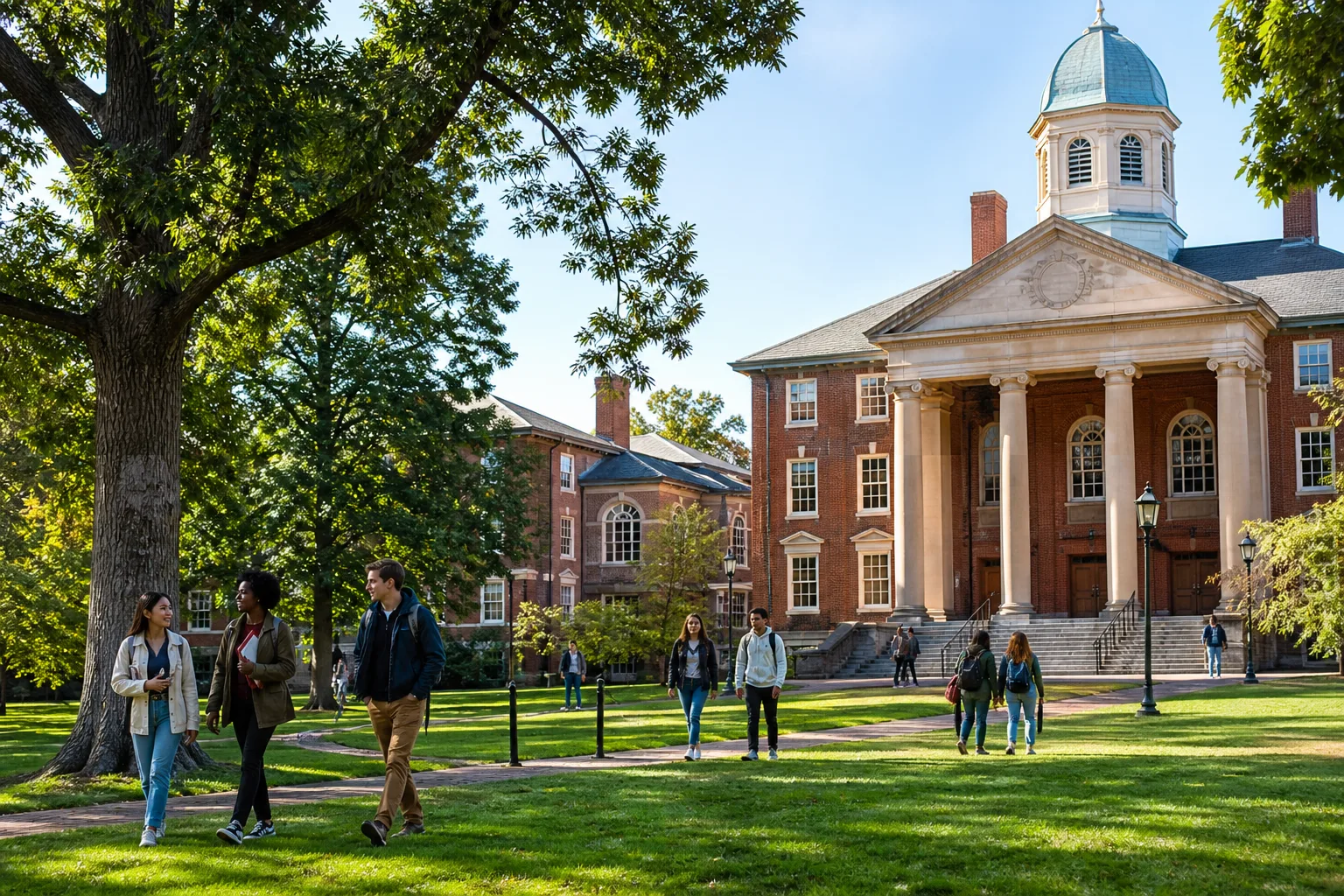 Vibrant campus life
Clubs, events and leadership opportunities
 Diverse community
Meet students from around the world
Research & innovationAccess labs, mentors and real projects
 Explore the U.S.
Study in iconic cities and college towns
8
Student visa process
Once accepted, follow these key steps to get your F-1 student visa and prepare to arrive in the U.S.
Get accepted by a university
Receive your form from the school
Book and attend your interview
Receive your student visa
Get ready for your new journey
Quick answers
Frequently asked questions
Not always. Many U.S. colleges are test-optional, but a strong SAT score can still strengthen an international application and unlock merit scholarships.
Yes. Most U.S. universities accept IELTS Academic as proof of English proficiency. Each college sets its own minimum score.
Yes. Some colleges offer need-based aid, merit scholarships, or both. Build affordability into your college list from the beginning.
Ideally 12–18 months before enrollment. That gives you enough time for testing, research, essays, recommendations, and financial planning.
Ready for your next step?
Explore U.S. universities and start your list.
Search 6,200+ schools, compare programs, and keep tests, essays, and deadlines in one place.
Explore U.S. universities