
World-class universities
Home to top-ranked universities offering globally recognized degrees.


World-class universities taught in English, tuition and living costs you can plan for, generous scholarships, and a straightforward student visa. Here is everything you need to apply to Hong Kong.


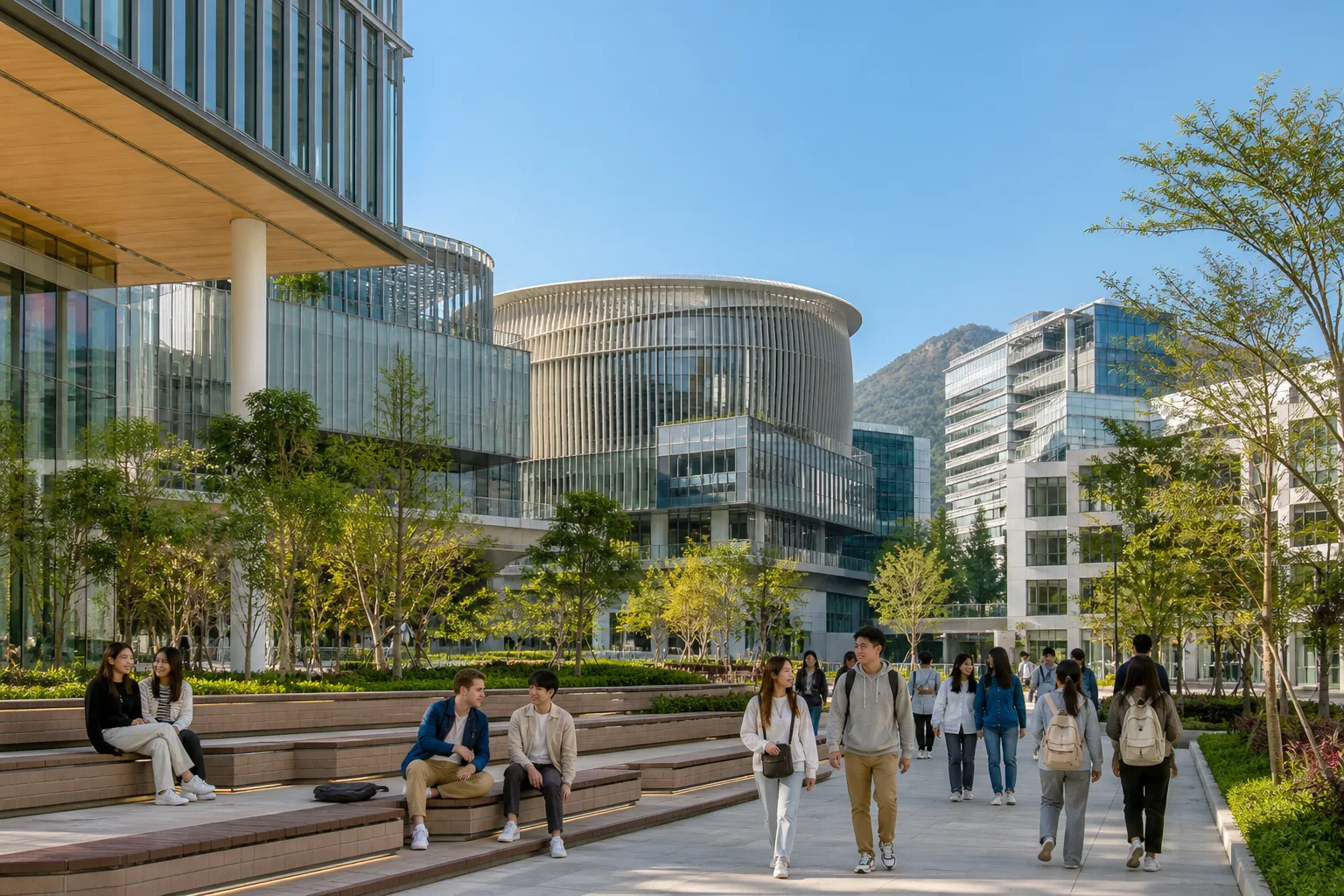
Your step-by-step roadmap to get admitted
Home to top-ranked universities offering globally recognized degrees.
Diverse campuses connecting students from all over the world.
Study in Asia’s fast and modern aviation superhub.
A gateway to Asia’s job markets and global companies.
Safe, modern city with an amazing mix of cultures.
Business ScienceTechnologyEngineeringHospitality
Full-time 18 months
Apply nowRequirements vary by university and program.
High school diploma for undergraduate, bachelor’s degree for postgraduate.
IELTS, TOEFL, or Duolingo accepted by most universities.
Transcripts, CV, personal statement, and recommendation letters.
Some programs may require portfolios or interviews.
Various scholarships are available for international students.
Tuition fees (approx.)HKD 100,000–200,000 / yearLiving costs (approx.)HKD 40,000–60,000 / yearInternational students can work part-time during studies.
Experience a dynamic city with a perfect blend of East and West.
Most international students need a student visa.
The questions international students ask most often about IELTS scores, tuition, scholarships and the Entry Permit.
Most programmes ask for IELTS 6.0–6.5 overall, and competitive courses in business, law and journalism often ask for 7.0. TOEFL iBT 80–93 and Duolingo English Test 105–120 are common alternatives. HKU, HKUST, CUHK, CityU and PolyU each publish their own minimums per programme, so check the specific course page rather than relying on a university-wide figure.
Tuition for international students runs roughly HKD 100,000–200,000 per year, with MBA and specialised master's programmes above that range. Living costs add about HKD 40,000–60,000 per year, and accommodation is the largest single item. University halls are much cheaper than the private rental market, so applying for on-campus housing early makes a real difference to your budget.
No. Teaching at Hong Kong's public universities is overwhelmingly in English, including most undergraduate and postgraduate programmes. Cantonese is useful for daily life and part-time work, but English is enough to complete a degree and to navigate campus, government services and most of the city.
International students apply directly through each university's own online admissions portal, so there is no single centralised system like UCAS. That means separate applications, separate fees and separate deadlines for each institution. Main-round applications for the autumn intake typically open in the autumn of the preceding year and close between December and April.
Yes. Universities offer entrance and merit scholarships that range from partial tuition to full tuition plus a living stipend, and several are awarded automatically based on your admission application. At doctoral level the Hong Kong PhD Fellowship Scheme provides a substantial monthly stipend and a conference allowance, and it has its own December deadline separate from the university application.
Full-time non-local students at degree level can normally take on-campus work up to 20 hours per week during term, plus summer internships and off-campus curriculum-related internships under the Immigration Department's arrangements. Rules are attached to your student visa, so confirm the current conditions with your university's international office before accepting any job.
Your university acts as your sponsor. Once you accept an unconditional offer, the institution submits your Entry Permit application to the Immigration Department on your behalf, which is why it is faster and simpler than most student visa routes. Processing usually takes several weeks, so accept your offer promptly to leave enough time before term starts.
Yes. The IANG arrangement (Immigration Arrangements for Non-local Graduates) lets graduates of full-time local degree programmes stay to look for work, and the initial period is granted without needing a job offer first. It is one of the most open post-study work routes in Asia.
Hong Kong consistently records low rates of violent crime and has fast, inexpensive and reliable public transport that runs late into the night. Campuses are secure and international student offices are well established. As in any dense city, ordinary precautions against petty theft still apply.